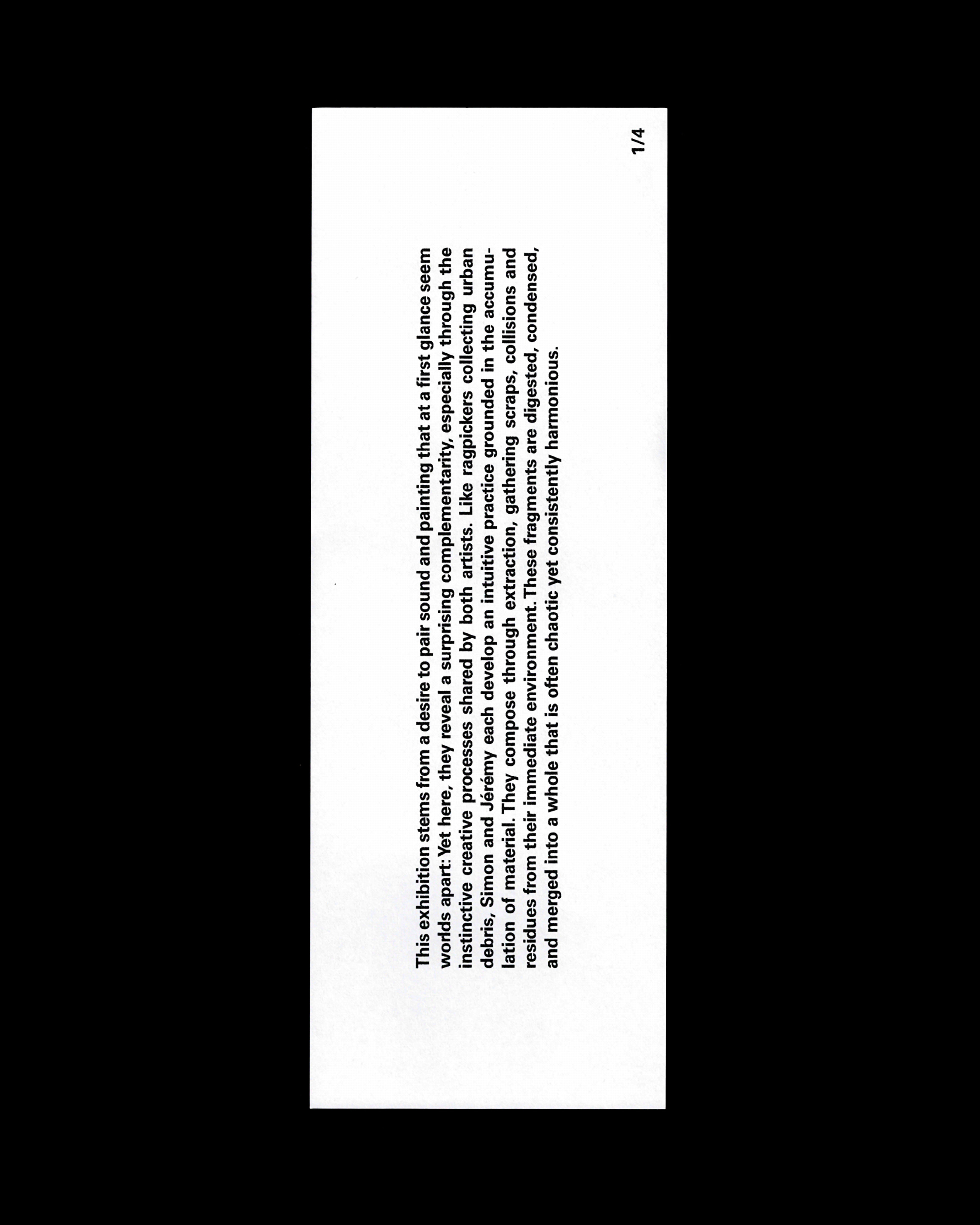
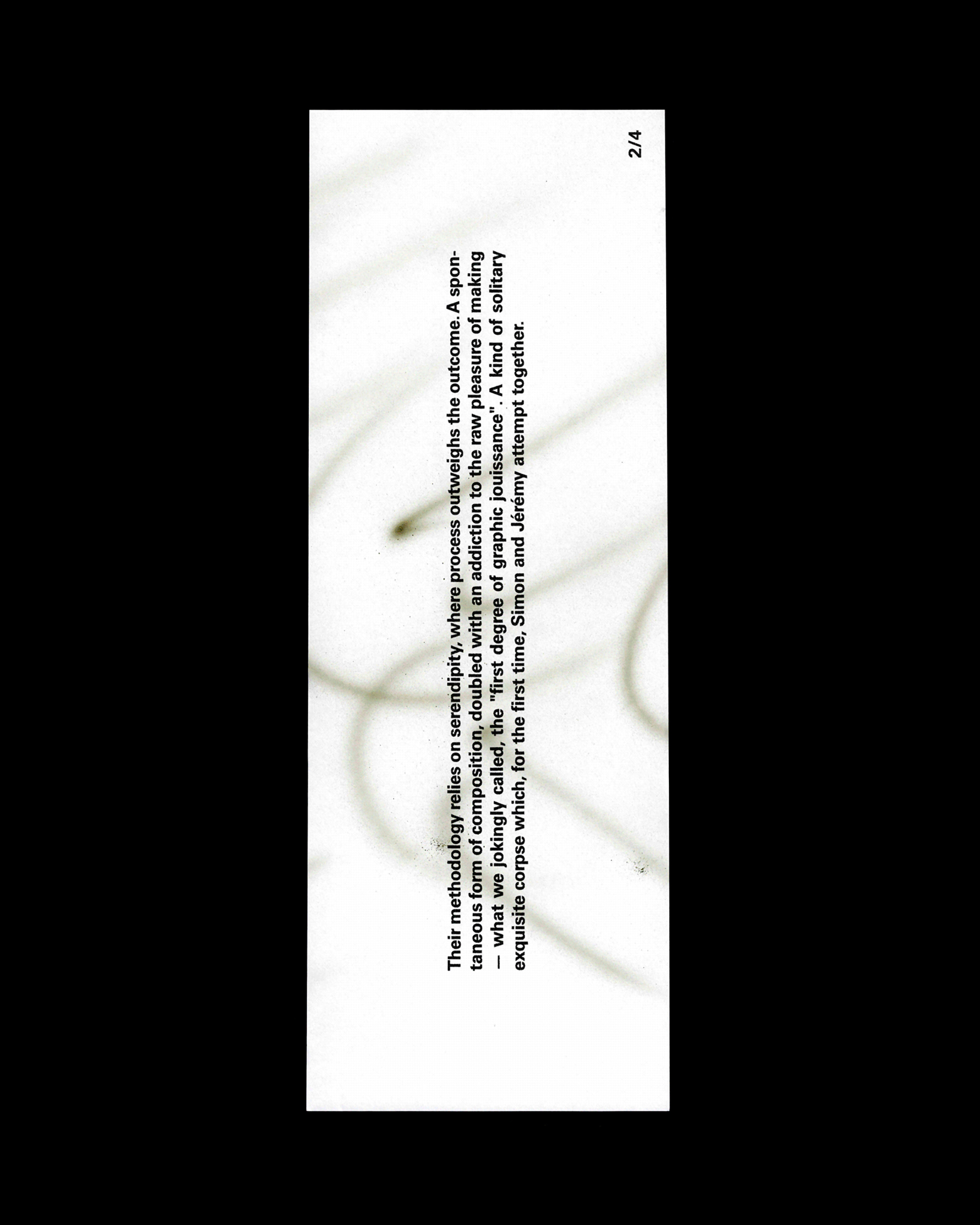
Gribouillages Exquis stemmed from a desire to pair sound and painting that at a first glance seem worlds apart: Yet here, they reveal a surprising complementarity, especially through the instinctive creative processes shared by both artists. Like ragpickers collecting urban debris, Simon and Jérémy each develop an intuitive practice grounded in the accumulation of material. They compose through extraction, gathering scraps, collisions and residues from their immediate environment. These fragments are digested, condensed, and merged into a whole that is often chaotic yet consistently harmonious. Their methodology relies on serendipity, where process outweighs the outcome. A spontaneous form of composition, doubled with an addiction to the raw pleasure of making — what we jokingly called, the “first degree of graphic jouissance.” A kind of solitary exquisite corpse which, for the first time, Simon and Jérémy attempt together.
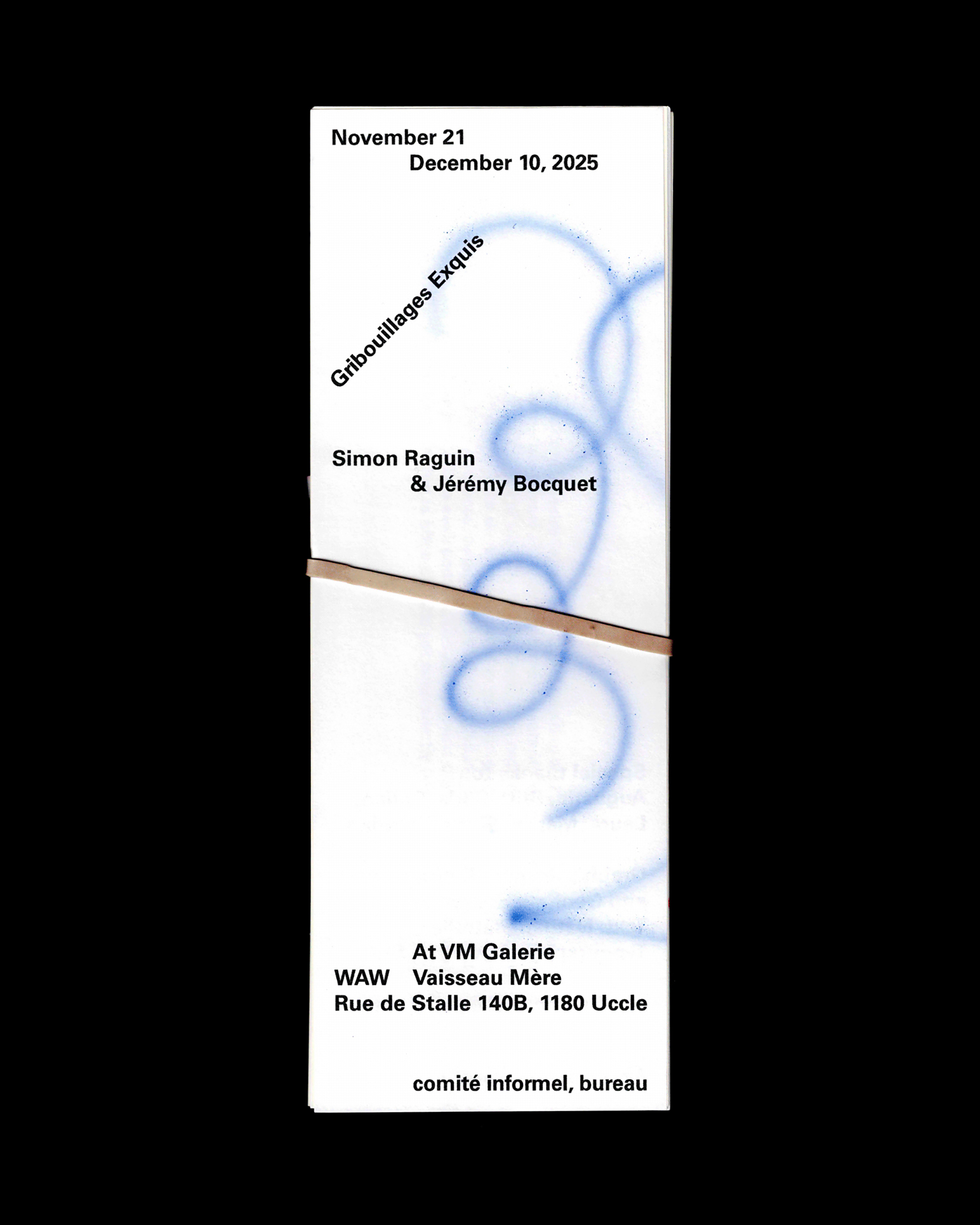
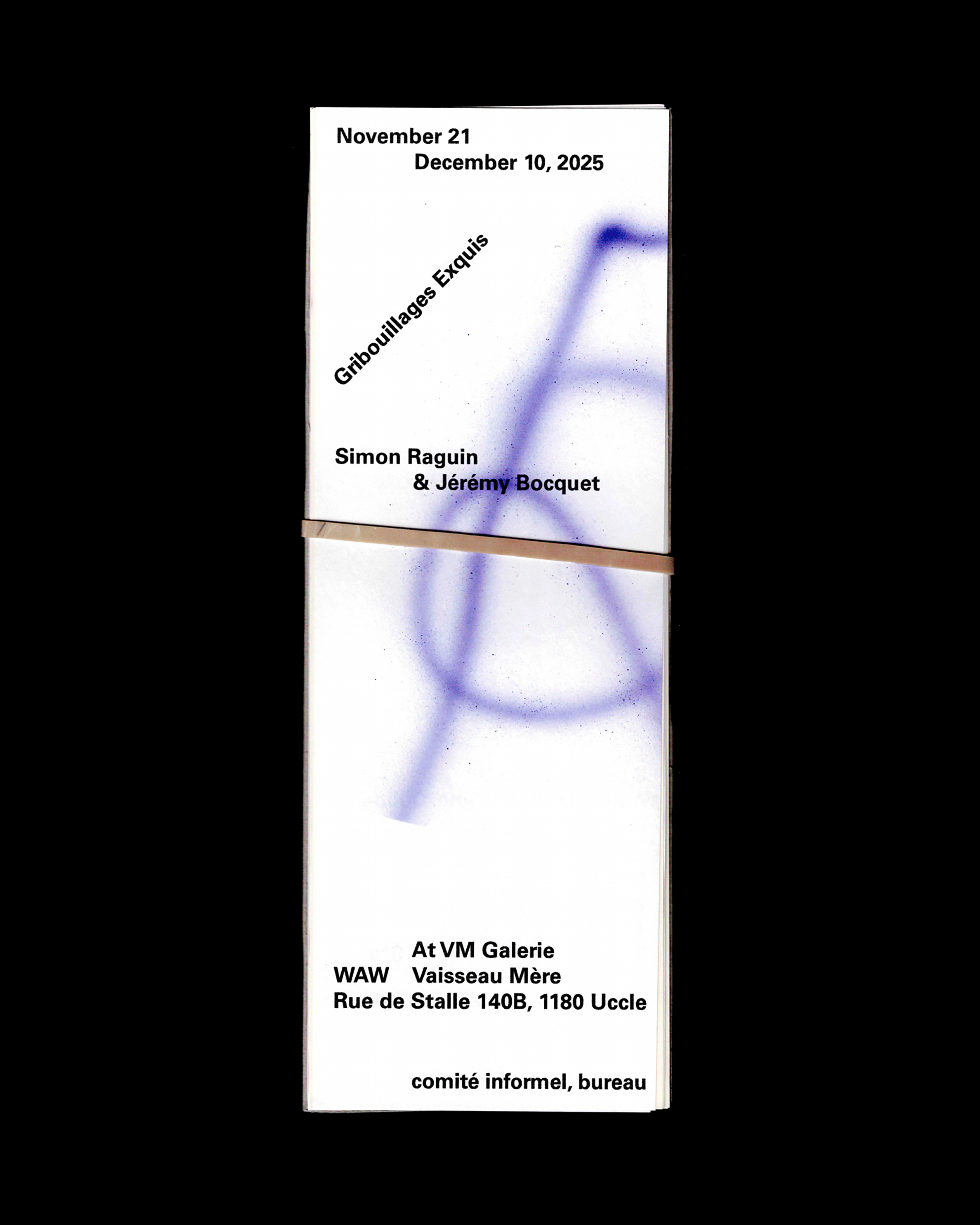
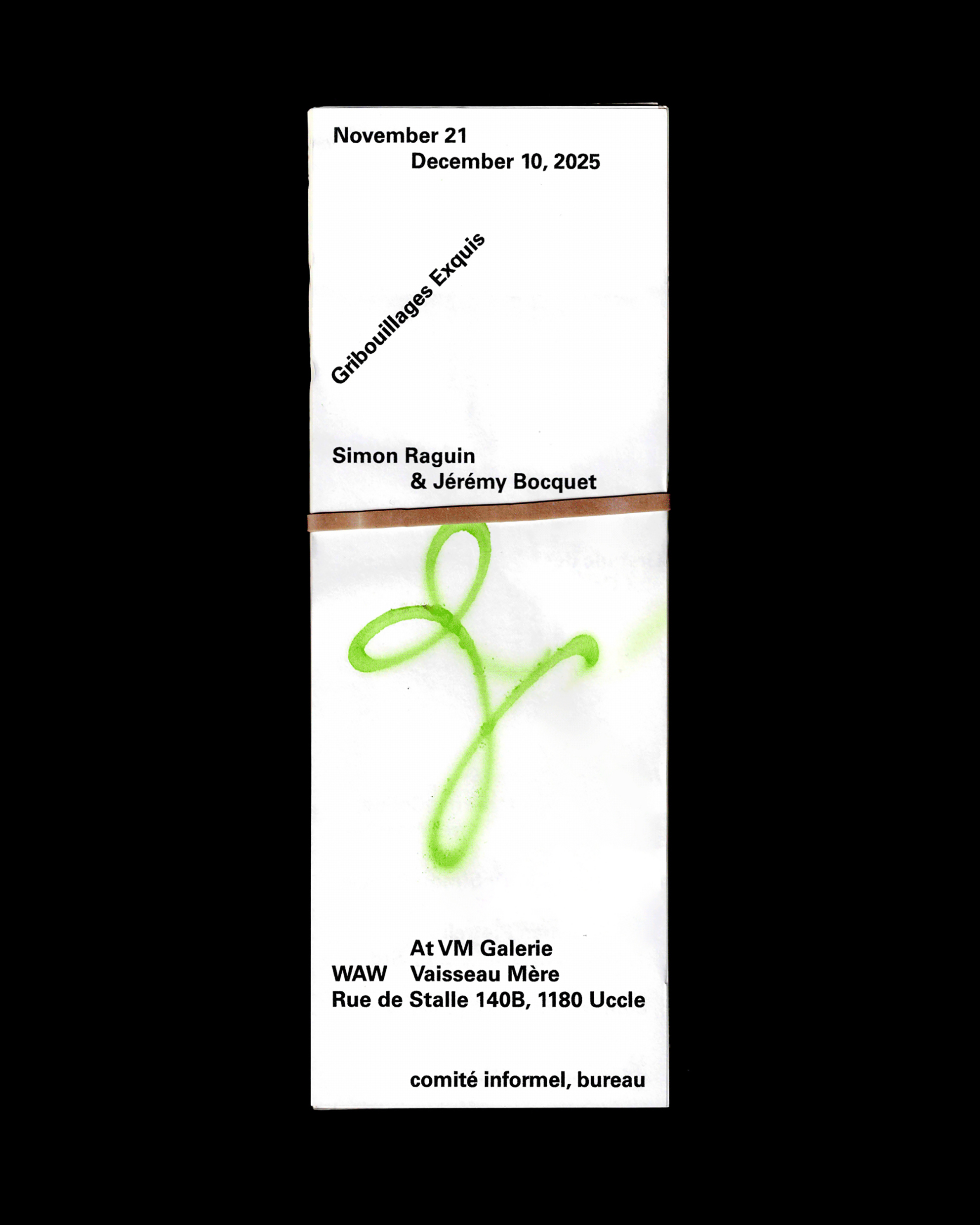
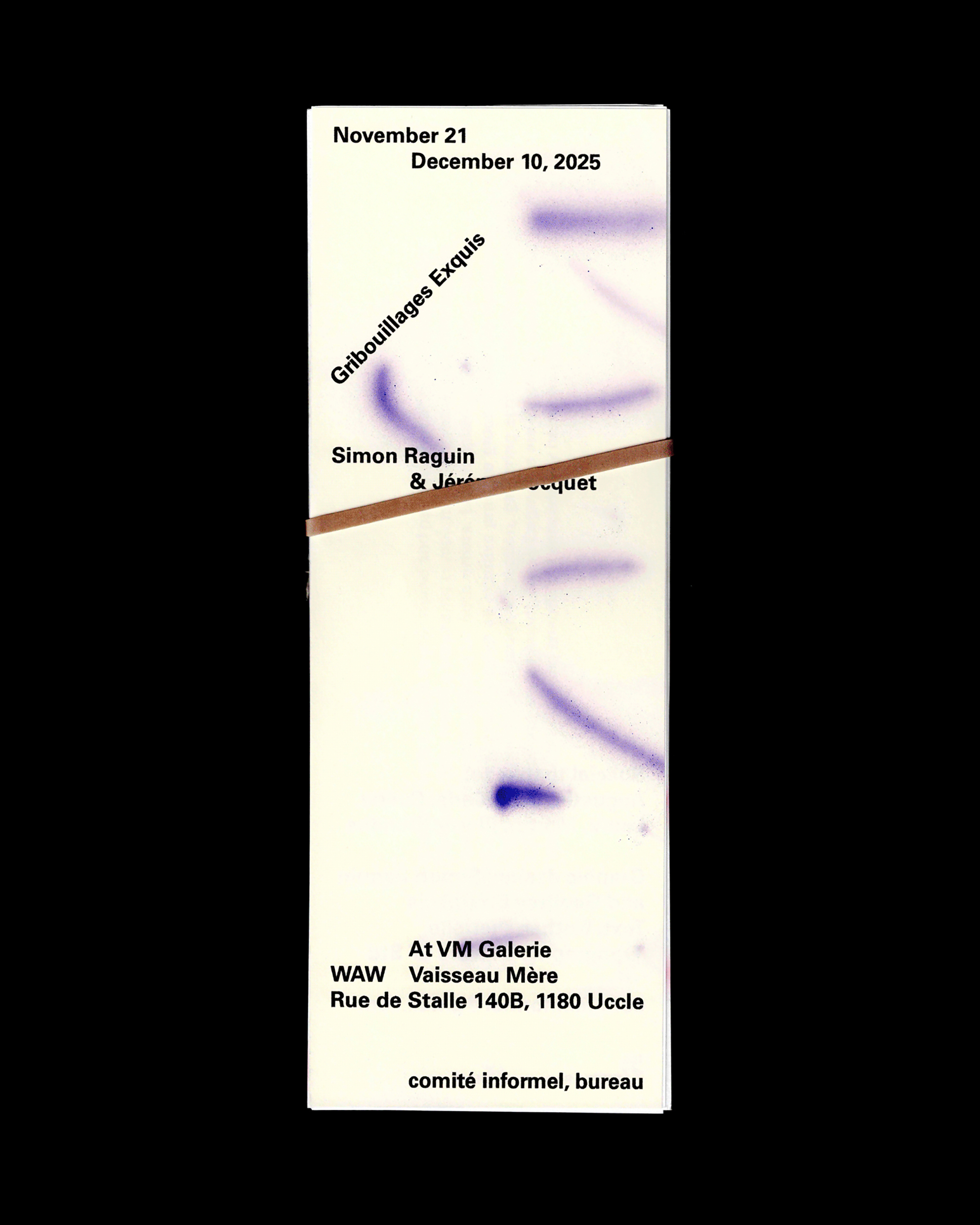
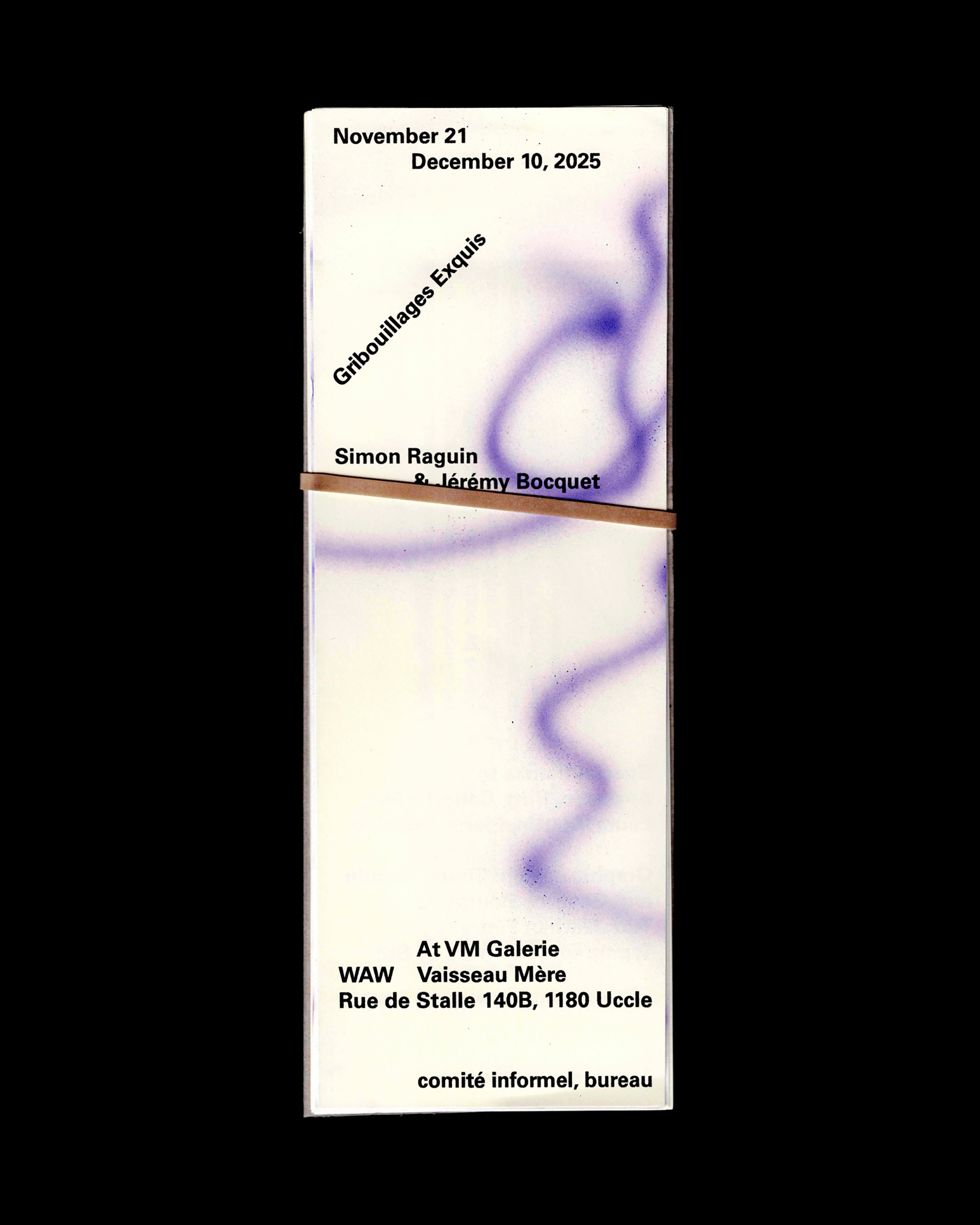
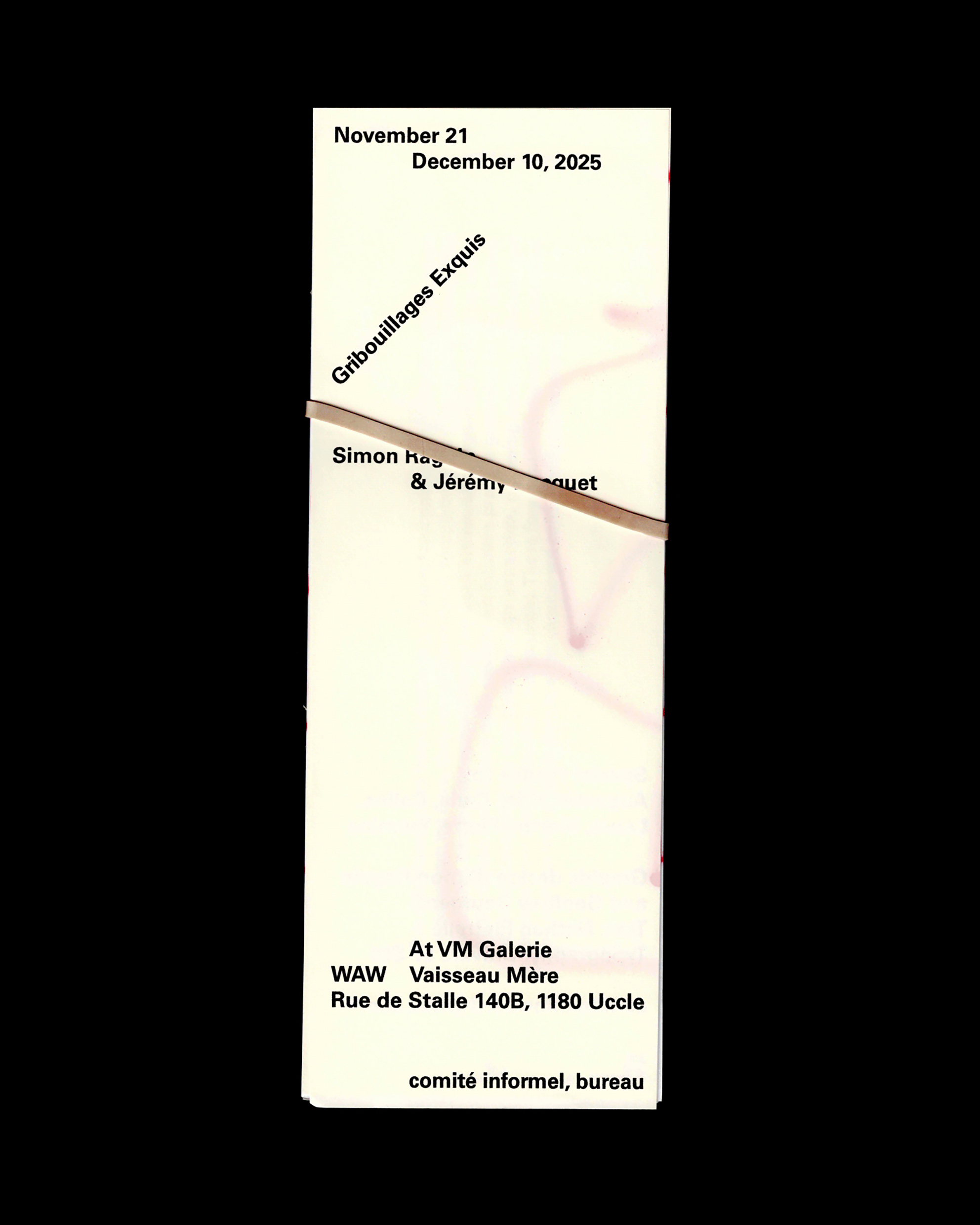
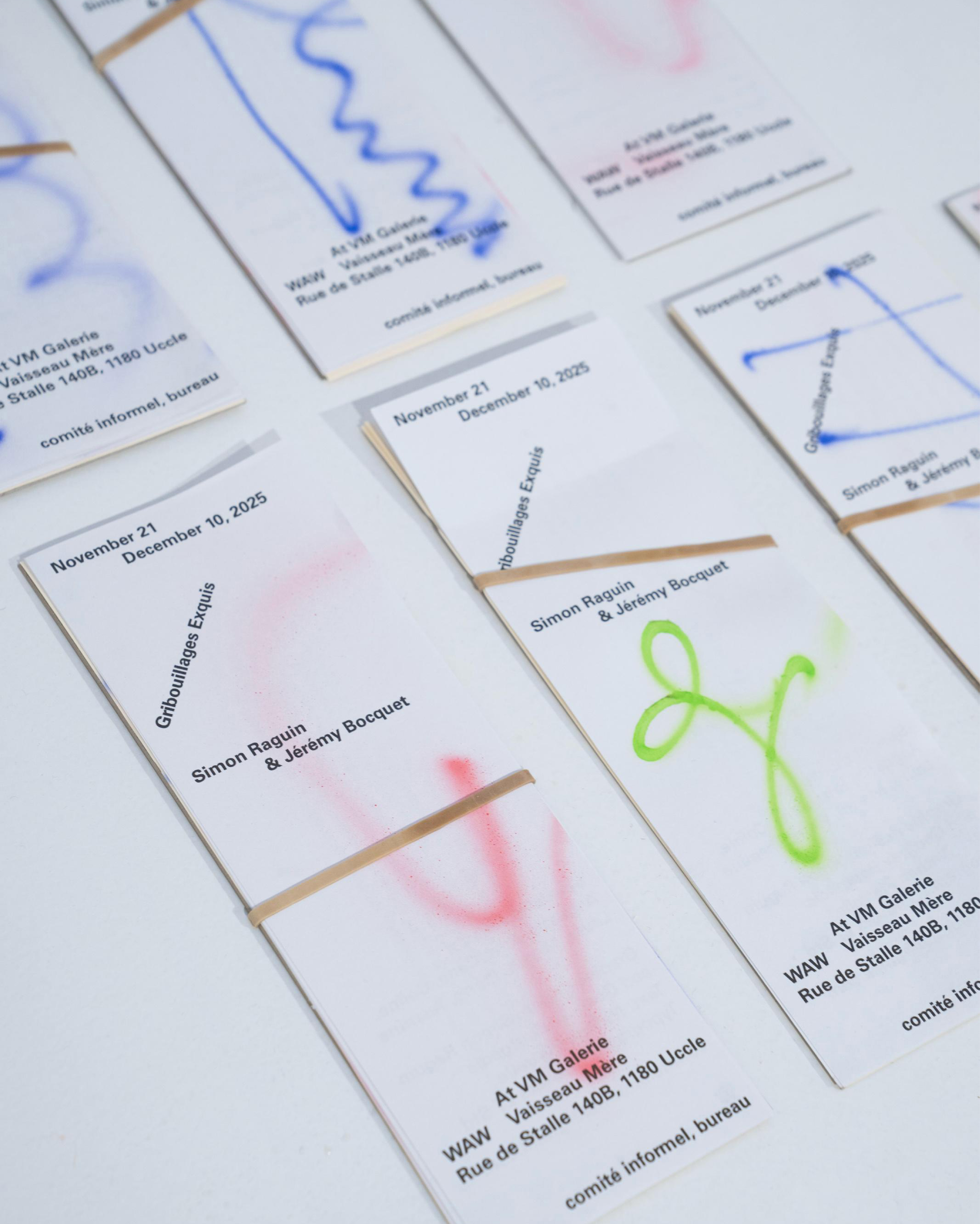
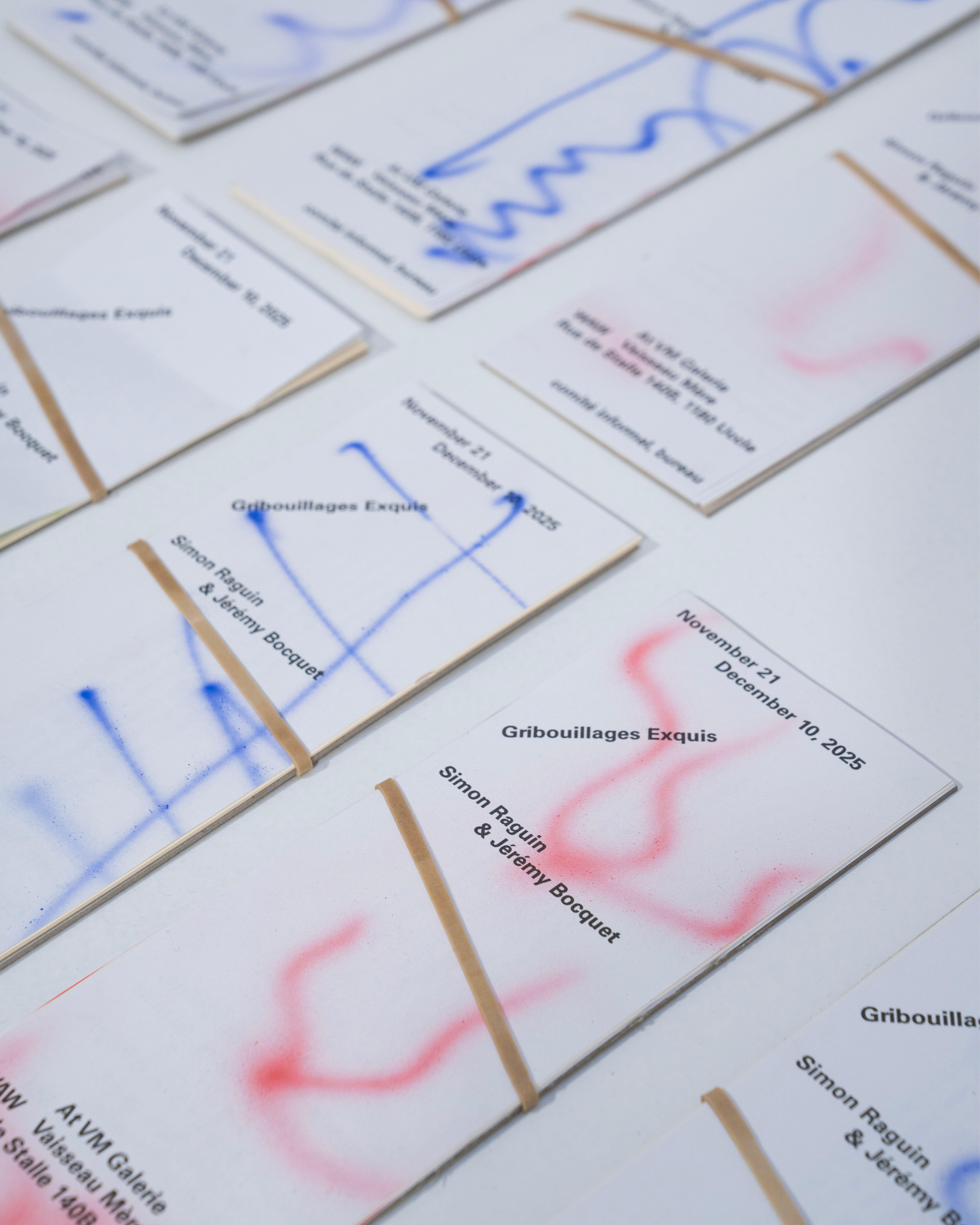
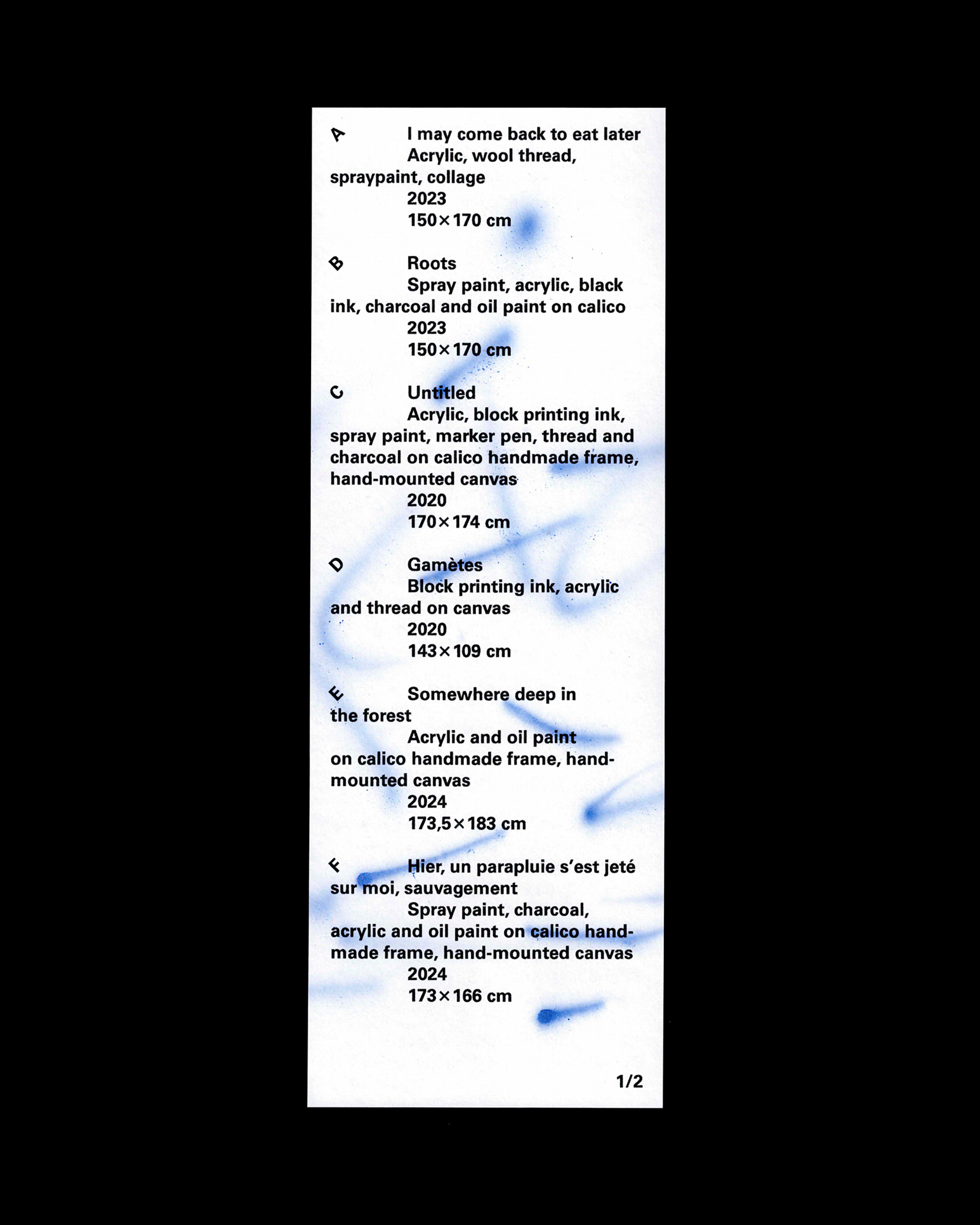
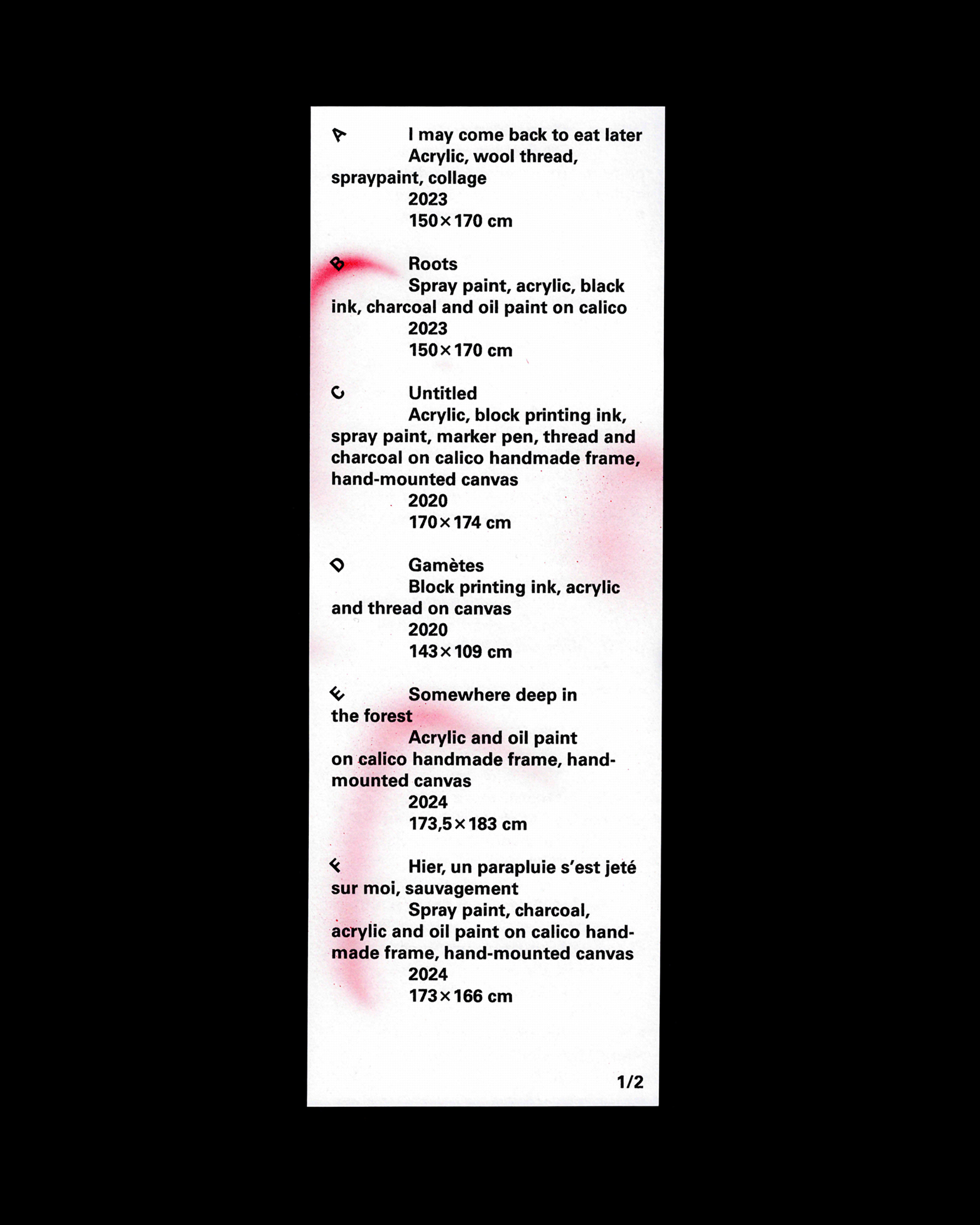
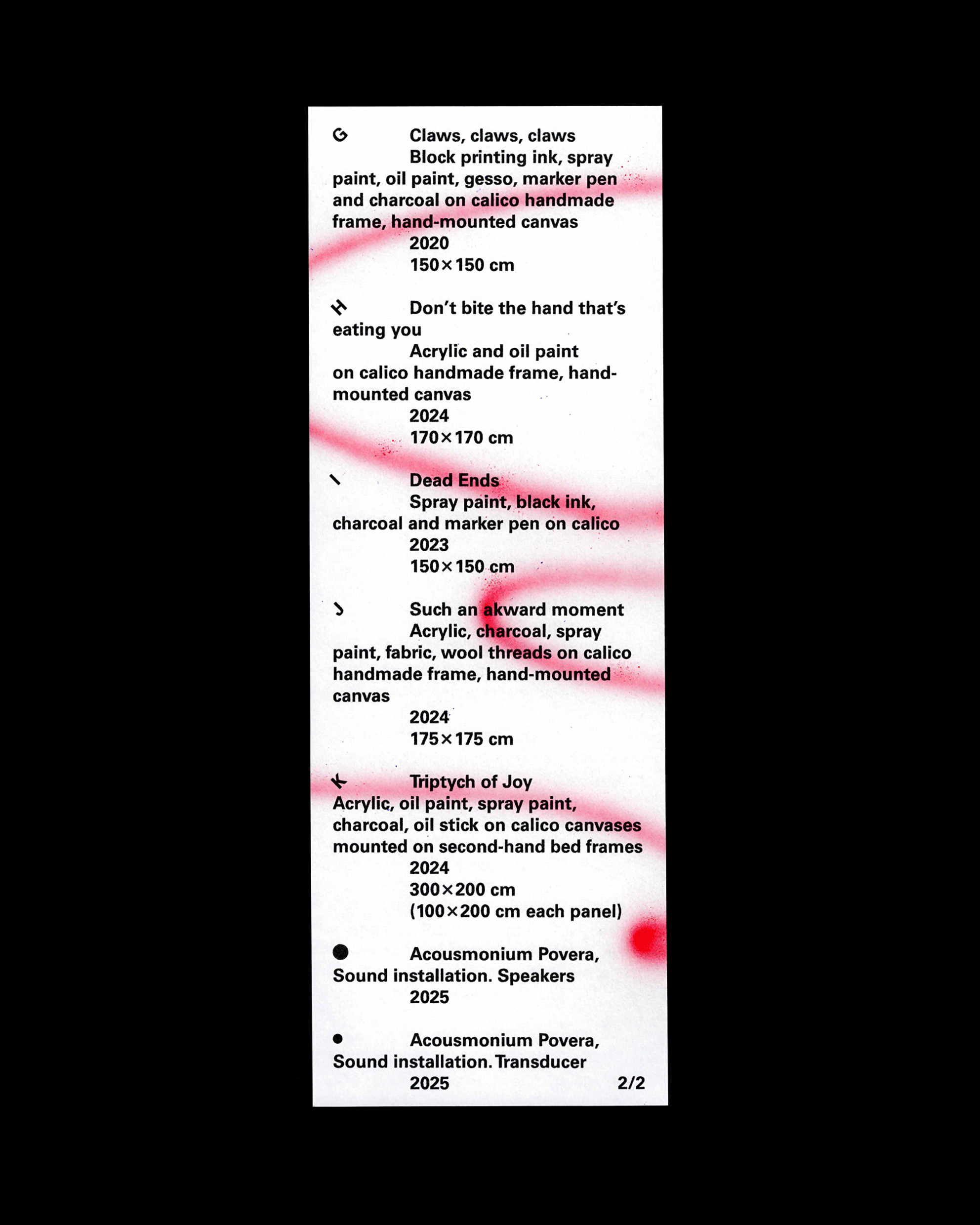
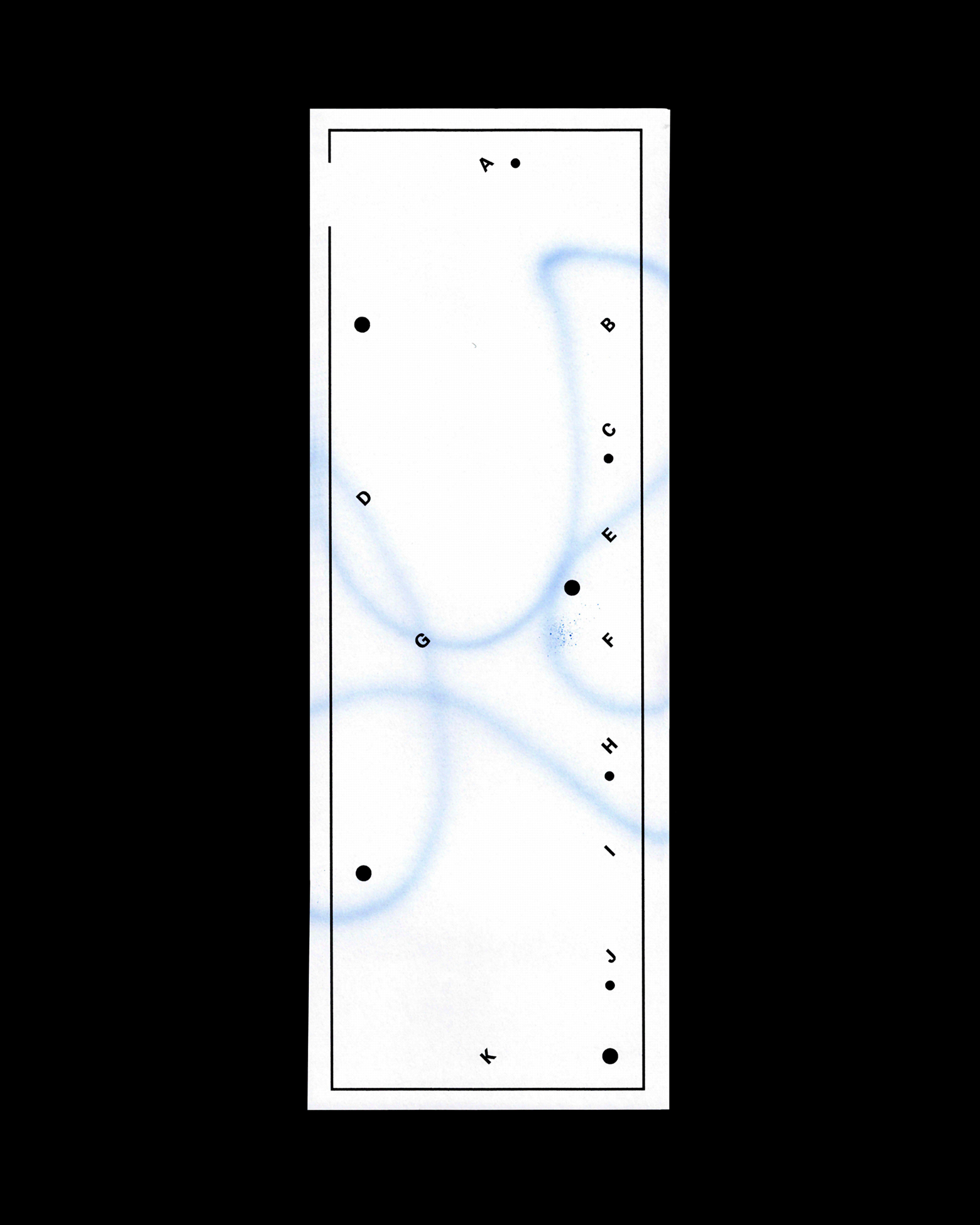
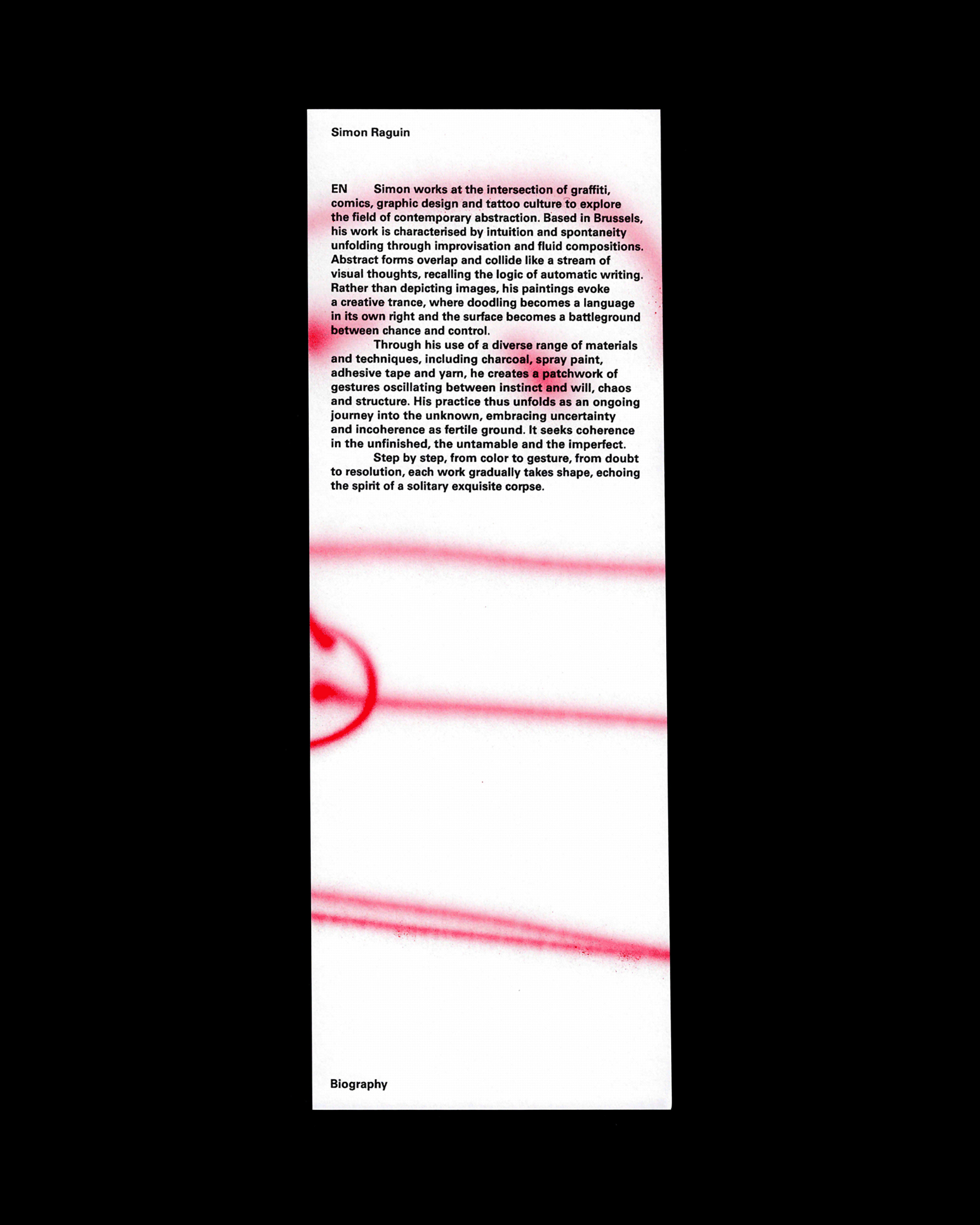
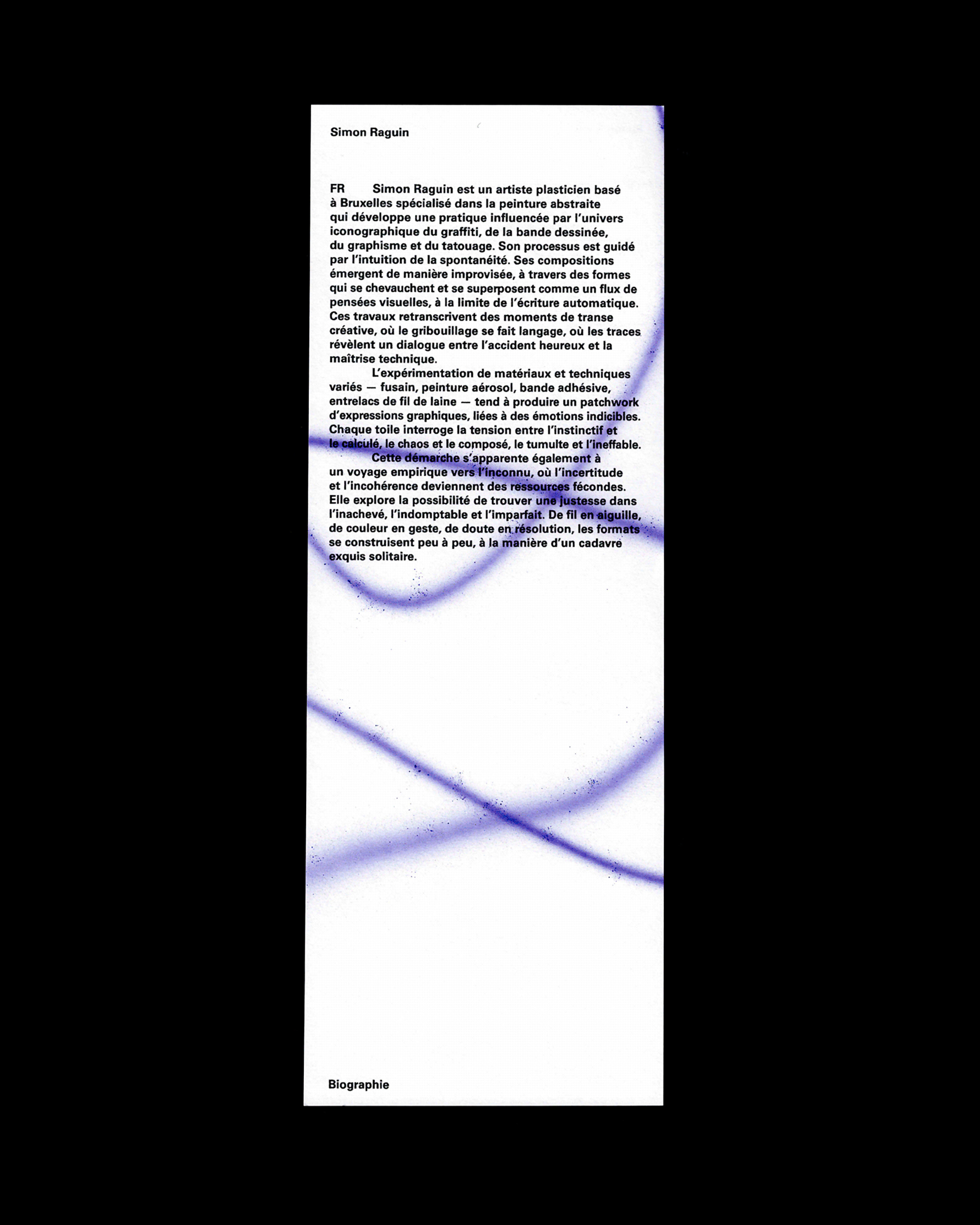
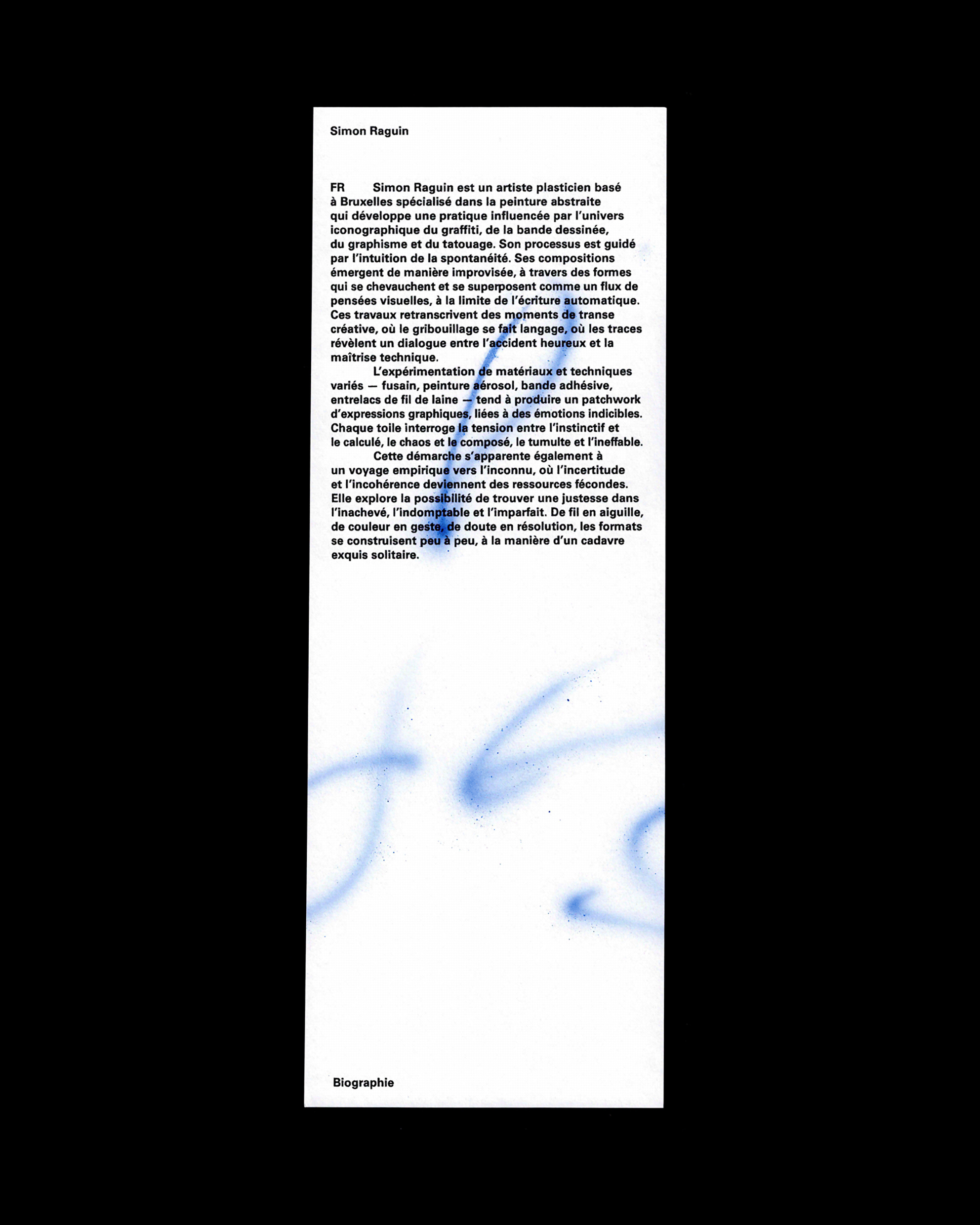
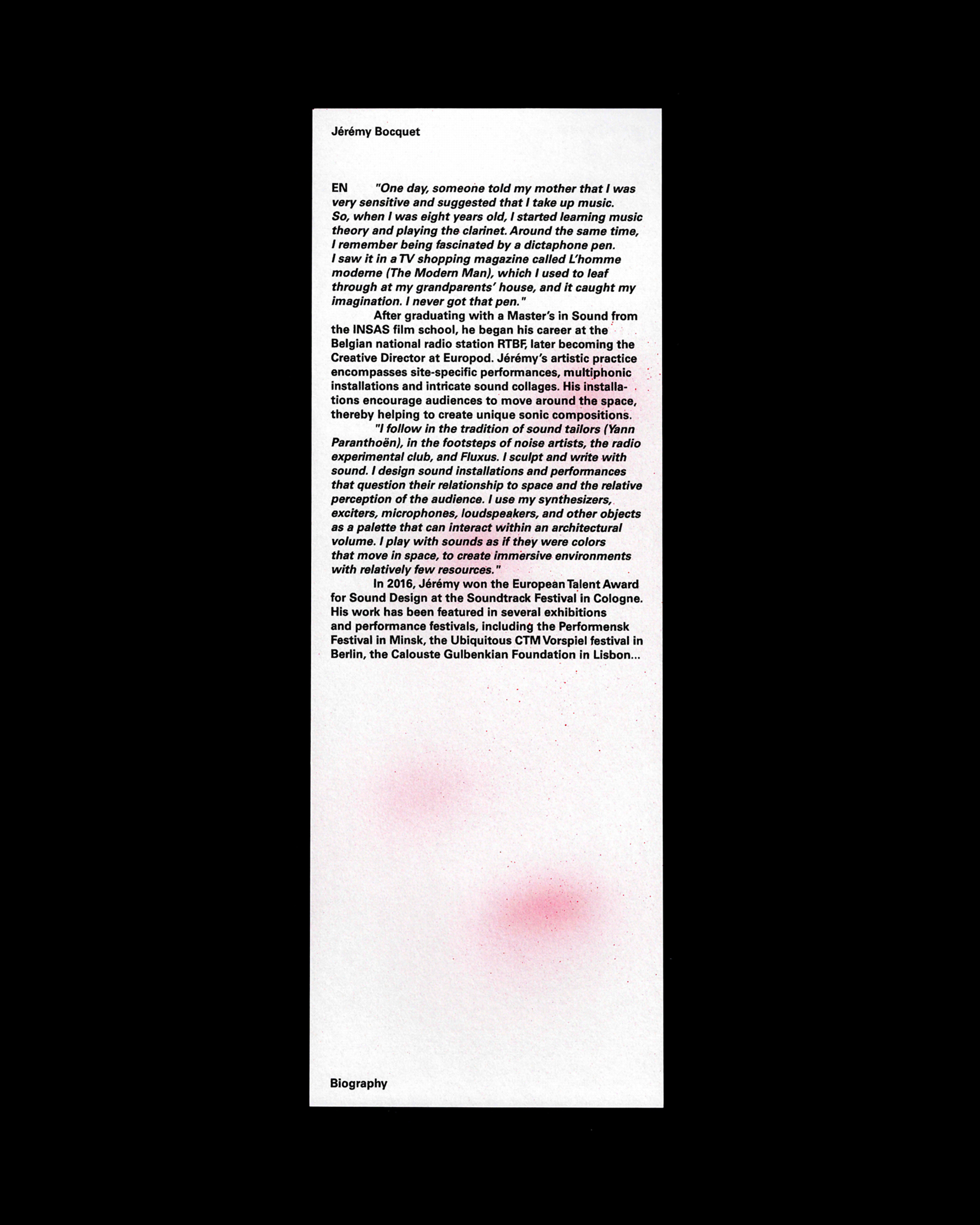
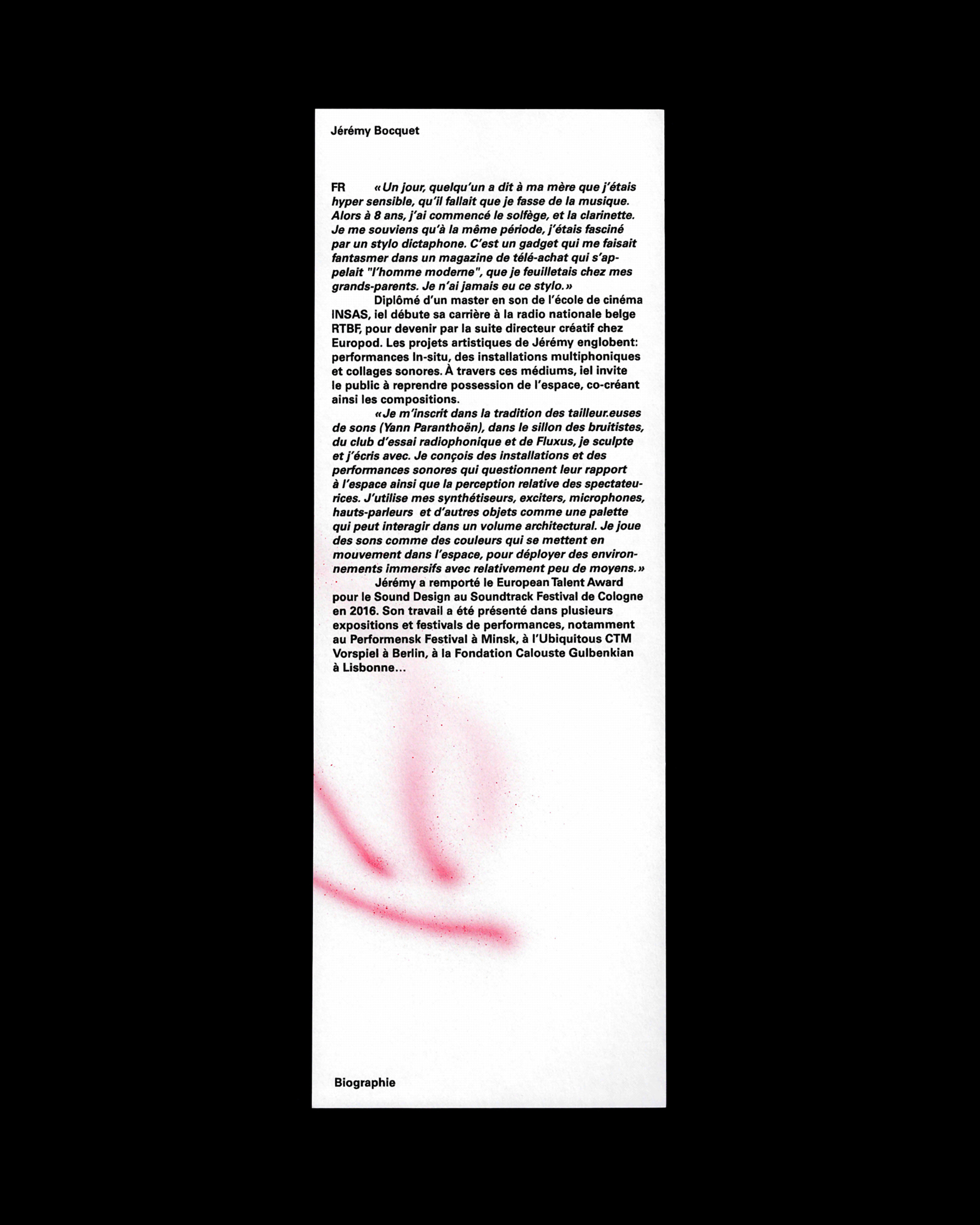
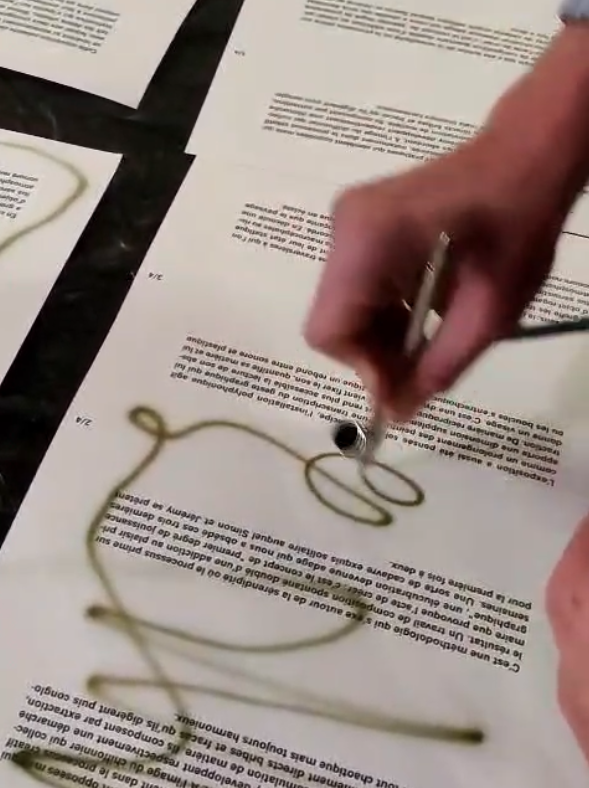
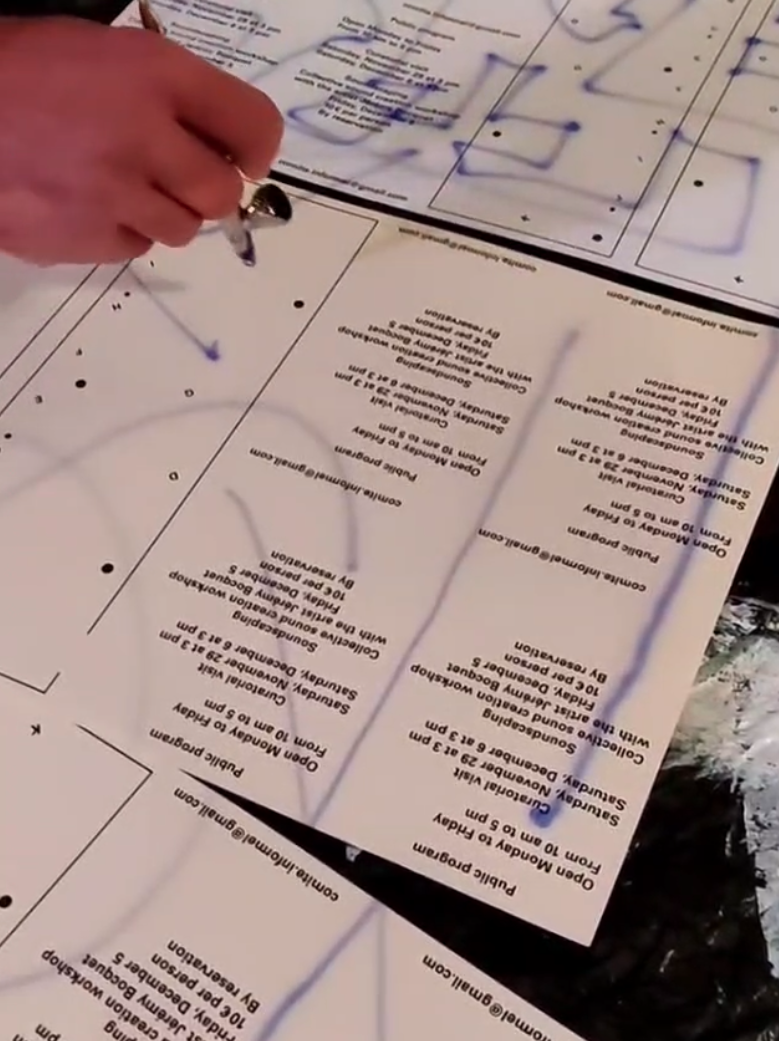
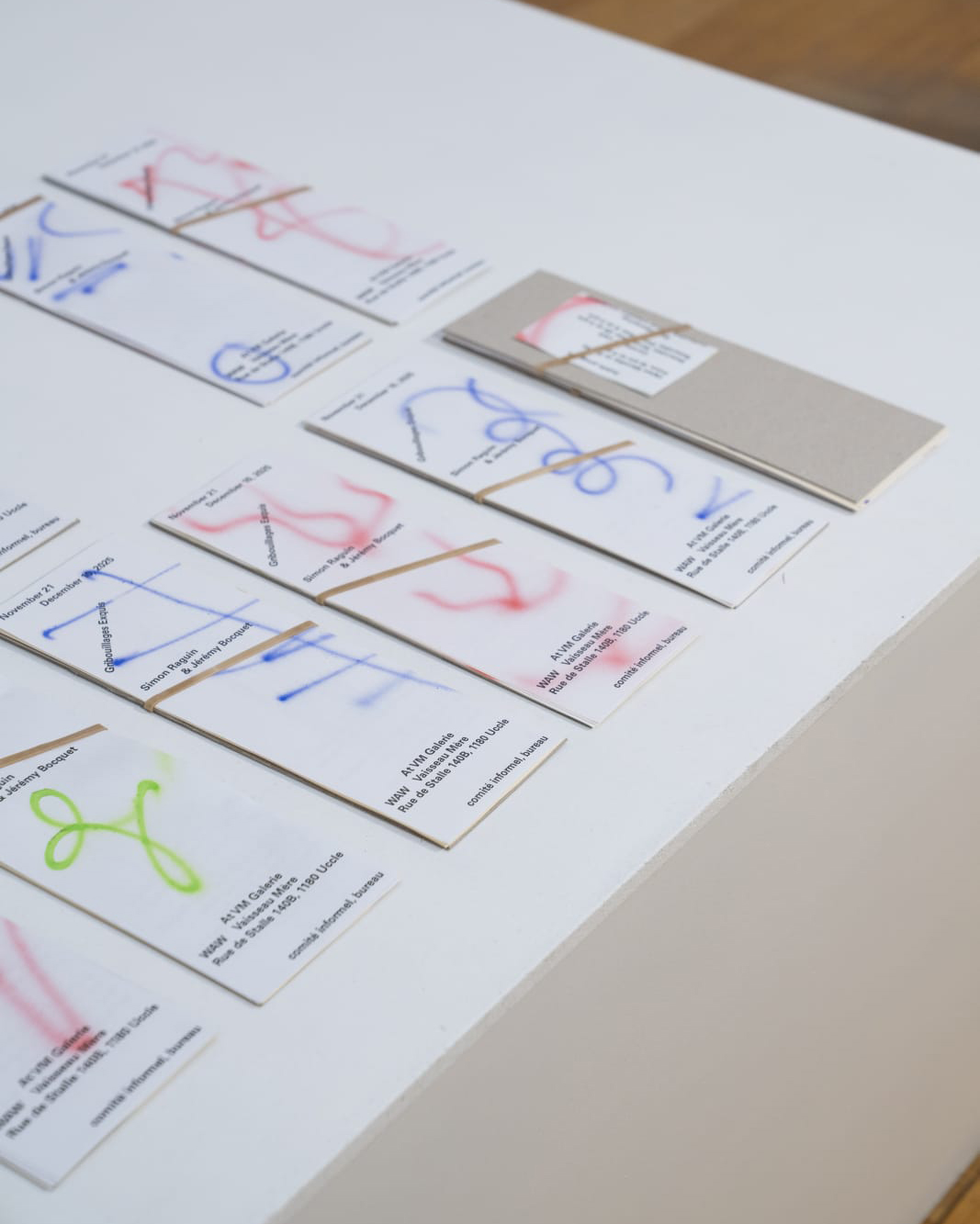

For the design of the exhibition booklet, I chose to echo the scenography of the exhibition and the way Simon’s paintings were hung: perpendicularly to the wall. To do so, I chose to separate each piece of content onto a sheet of paper (A3 cut into 4) and stack them on top of one another. The elongated format of these paper strips also references the lengthwise architecture of the VM Galerie. At the back of the pile of sheets, a piece of grey cardboard provides rigidity, and an elastic band serves as the binding. To echo Simon and Jeremy’s free and spontaneous practice, I established a simple and systematic typographic principle, set in Helvetica. This straightforward structure leaves room for manual airbrush interventions made by Simon, prior to the cutting of the A3 sheets. In this way, each exhibition booklet is unique, featuring original drawings.
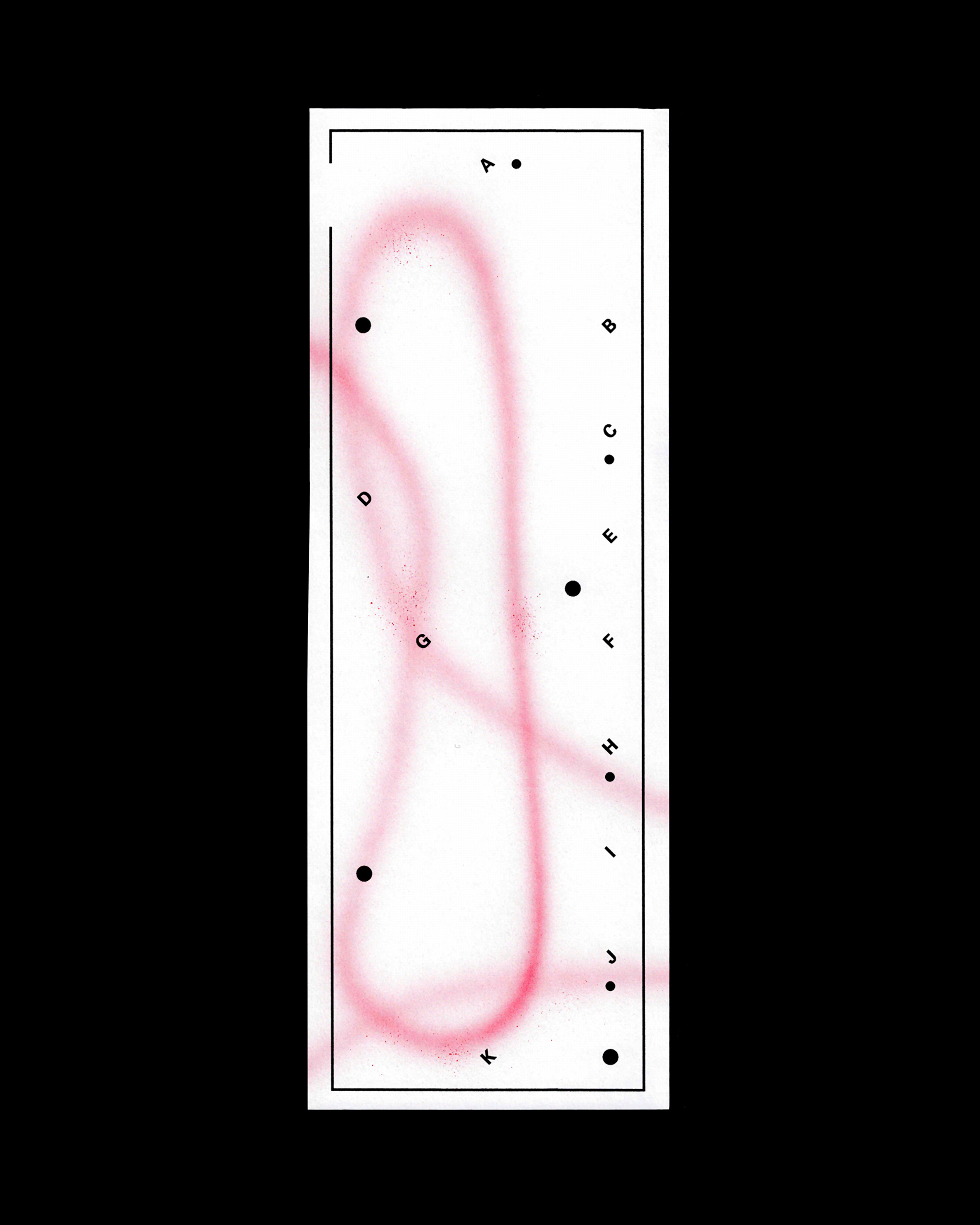

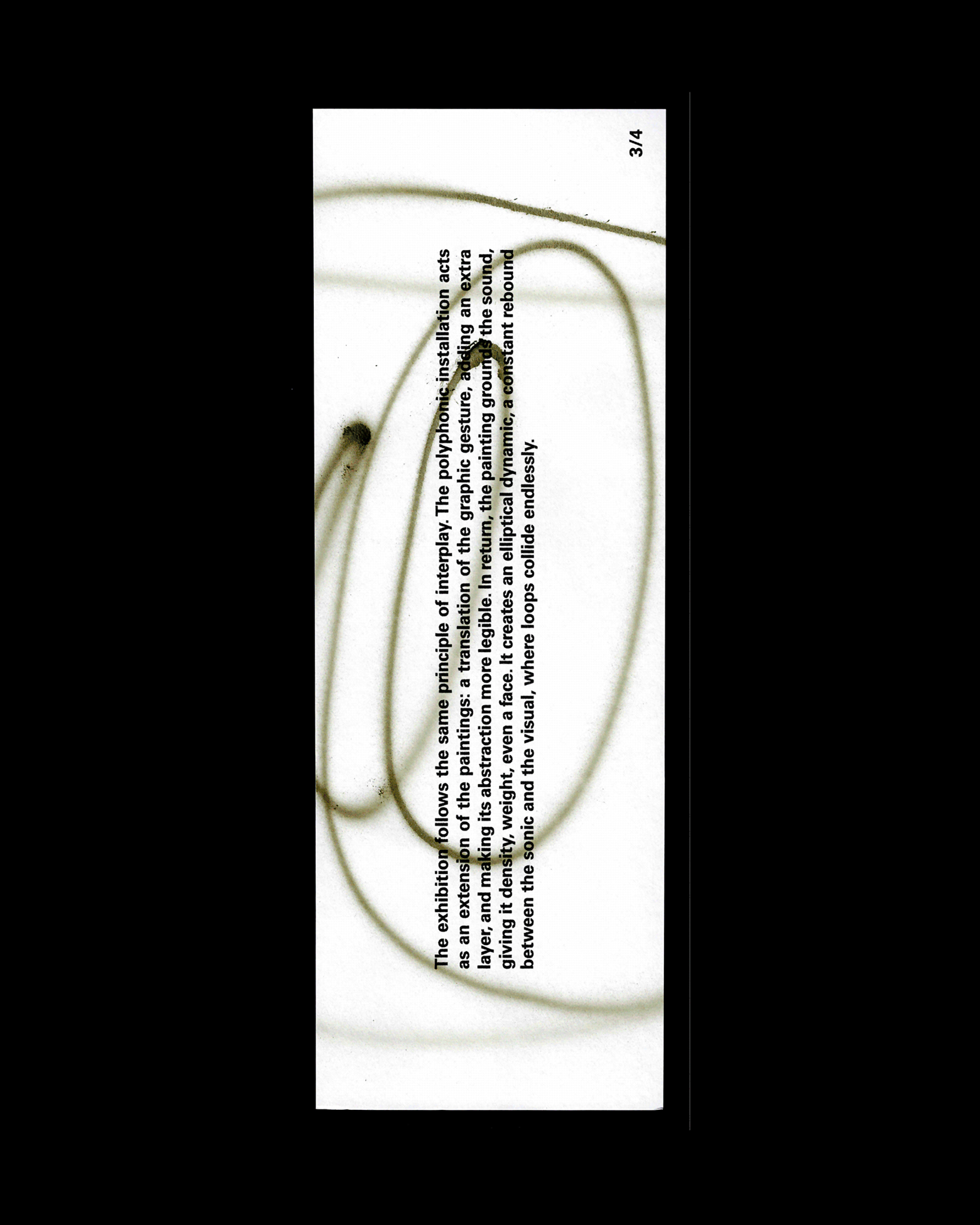
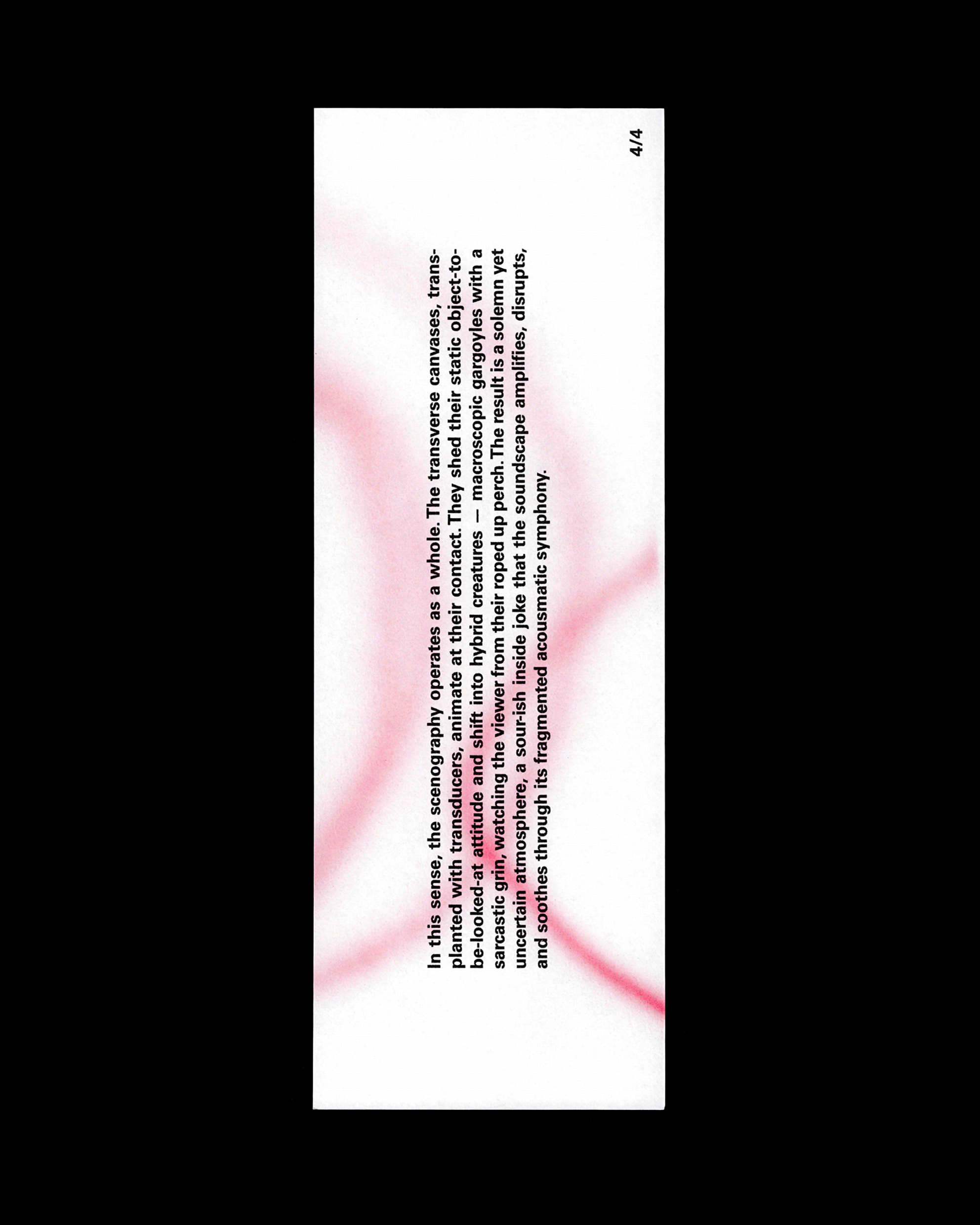






The exhibition follows the same principle of interplay. The polyphonic installation acts as an extension of the paintings: a translation of the graphic gesture, adding an extra layer, and making its abstraction more legible. In return, the painting grounds the sound, giving it density, weight, even a face. It creates an elliptical dynamic, a constant rebound between the sonic and the visual, where loops collide endlessly. In this sense, the scenography operates as a whole. The transverse canvases, transplanted with transducers, animate at their contact. They shed their static object-to-be-looked-at attitude and shift into hybrid creatures — macroscopic gargoyles with a sarcastic grin, watching the viewer from their roped up perch. The result is a solemn yet uncertain atmosphere, a sour-ish inside joke that the soundscape amplifies, disrupts, and soothes through its fragmented acousmatic symphony.
Related projects